
While the ideal timeline for a website redesign depends on your property’s unique needs, it’s important to review your site regularly and stay current with industry trends—a website that looks like it’s from the 90s will not impress potential guests. You may as well be sending them to Ask Jeeves!
As your property’s online lobby, your website plays a critical role in shaping guests’ first impressions. Just as your physical lobby is designed to welcome, your website should reflect a professional, thoughtfully curated aesthetic that boosts your guests’ confidence to book. According to a Stanford University study, 75 percent of customers evaluate credibility based on web design, so an attractive, up-to-date site is a strategic necessity. Here’s how frequently you should consider a refresh.
Timelines
Generally speaking, a redesign is a good idea every two to three years. Technology, design trends, and user expectations evolve rapidly, and what feels cutting edge today can appear woefully out of touch tomorrow.
Modern websites are typically built on themes or templates, enhanced with various plugins and integrations for customization. Over time, these components require more frequent updates and patches to stay compatible, which can slow performance and introduce glitches. Rather than continually patching an aging framework, a full redesign ensures a fast, secure, future-ready site for a seamless guest experience.
Signs It’s Time for a Redesign
While two to three years is a general guideline, the ideal time for a redesign depends on the current state of your site. So, how do you know when the moment’s right? The following signs indicate that you should reach out to your designer:
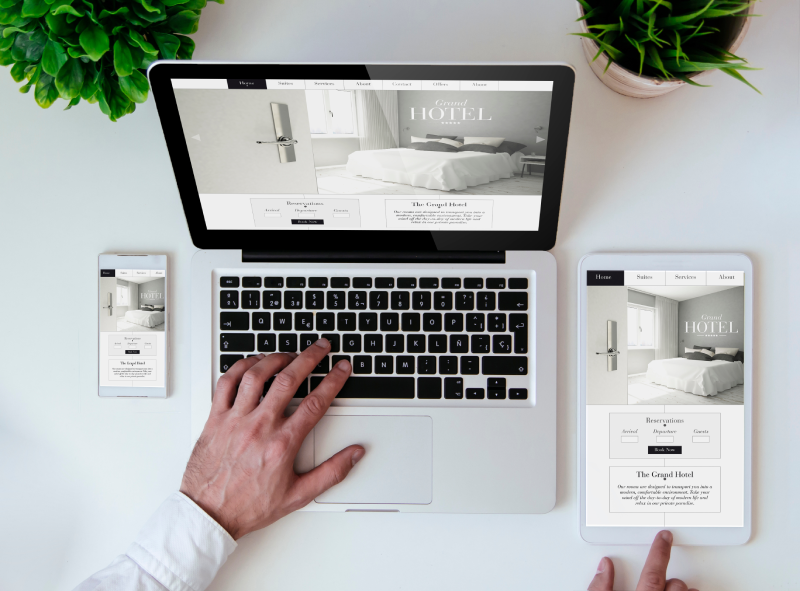
- It’s not mobile friendly — Over half of website traffic originates from mobile devices, and Google’s mobile-first indexing means your site’s mobile performance directly impacts visibility and search rankings. If your site doesn’t display or function properly on a smartphone, you’re losing traffic. Adopt a modern, responsive design that automatically adapts to every screen size, providing an optimal experience for all users.
- It doesn’t reflect your business — From hero images to the color palette, every aspect of your website should reflect your brand, accurately communicating your stay experience and unique selling proposition. That’s what it’s for! If your site fails to showcase the latest developments at your property, i.e., recent renovations, a change in ownership, etc., it’s time for an update.
- It offers a poor user experience — Frustrating navigation, slow load times, accessibility issues, or broken links quickly turn potential guests away. When visitors can’t find information, they’re far less likely to complete a booking. To get an objective perspective, ask a friend, family member, or usability tester to explore your site. Fresh eyes reveal pain points you might overlook.
- It’s difficult to update — If updating your site feels complicated, or you need to contact (and pay) your designer for every small change, it’s time for a redesign. A modern website should empower you to make updates easily through a user-friendly content management system (CMS) like WordPress. The ability to refresh content regularly isn’t just convenient; it’s essential for strong search engine optimization (SEO) and visibility in generative search results.
- It looks out of date — View your website through a guest’s eyes. Does it feel fresh, or does it show its age? Outdated elements—such as bright background colors, small images, or distracting animations—signal that your site is behind the times. Trust your instincts as an online user. If something feels off, it probably is. Compare your website to those of your competitors and be honest about how it measures up.
- It’s not secure — Hospitality fraud is on the rise, with 32 percent of Canadians saying they’ve been a victim of a travel scam. Do your part to protect guests by ensuring your website is fully secure, equipped with an active SSL/TLS certificate and a PCI-compliant payment gateway. Regularly review and update security measures.
- It generates poor results — Your website’s primary goal is to generate bookings, and it needs a redesign if it doesn’t accomplish that. With WebRezPro’s online booking engine, you can automatically track bookings coming from your website. In addition, monitoring your site’s key performance metrics, such as total traffic, traffic sources, bounce rates, pageviews, and exit pages, provides valuable insight. Tools like Google Analytics enable you to gather this data so that you can make informed, conversion-boosting decisions.
Impact on SEO, GEO, and Conversions
A visually engaging, user-friendly website doesn’t just look good; it ensures guests find you online. Search engines and AI-driven discovery tools prioritize sites with strong user experiences. Factors like fast load times, intuitive navigation, and mobile responsiveness all play a critical role in SEO performance. If your site falls short in these areas, search rankings suffer.
The same factors that influence traditional search rankings also affect how your property appears in AI-powered search results. However, generative engine optimization (GEO) may require updating and restructuring website content, even if it already meets SEO best practices. If adapting your site for AI feels cumbersome or limited by your current design, you need a full refresh.
Seventy-two percent of travelers prefer to reserve their trip online, making a well-designed, easily discoverable website essential to conversions and revenue.
Assess your website regularly to determine whether it’s aligned with market trends and continues to deliver an exceptional user experience, both for guests and search engines.
If you’re considering a redesign, our team can help. Contact us for a free, no-obligation quote and discover how our experts elevate your online presence to drive bookings.