
Your lobby tells a story: furnishings, lighting, scent, and staff uniforms. Your digital presence should do the same. In today’s world, potential guests aren’t only walking in through your front door. They arrive first on Google, TripAdvisor, or even Instagram—and your website greets them. But if your website looks dated, is difficult to navigate, or gives mixed messages compared to your social media or OTA listings, they’re likely to turn around and leave. Before a guest steps inside your property, your online presence has already made its impression.
Your brand’s digital identity is your brand’s handshake, smile, and welcome mat rolled into one. And like any good first impression, it should feel effortless, authentic, and memorable.
At the heart of that identity is your website.
Here at World Web Technologies (WWT), we’ve been helping independent hotels build strong digital identities long before Wi-Fi was a must-have. We understand that your online footprint isn’t just your website—it includes everything from OTA listings and review sites to your Instagram feed. And when all of those get wired together correctly, you get trust, loyalty, and more direct bookings.
Your Hotel Website: The Foundation of Your Digital Identity
Think of your website as the anchor point for your online presence. It’s where all roads lead: OTAs, review sites, and social channels all send curious travelers back to your site. And what guests see when they land there matters more than you think.
Research shows that most travelers visit a hotel’s website before making a booking, even if they ultimately book through an OTA. Your site is the moment of truth: it’s where you control your brand story, where you can offer direct booking perks, and where guests decide if your hotel is worth their trust (and their credit card number).
But here’s the catch: today’s traveler has little patience. If your website takes more than three seconds to load, they’re gone. If it isn’t mobile-friendly, they’re gone. If the “Book Now” button feels buried, you guessed it—they’re gone.
Today’s guests have a list of non-negotiables:
- Fast loading times
- Mobile friendliness
- Clear, compelling imagery and copy that reflect your guest promise
- Secure hosting, reliable forms, and seamless booking
Using a professional web developer can help your website (and your guests) enjoy fast load times, sleek mobile responsiveness, secure hosting, and a design that highlights the experience your property offers. In short: we make your digital lobby as inviting as your physical one through design that invites, messaging that feels honest, and UX that doesn’t force people to hunt for the Book button.
The Orbiting Channels: OTAs, Review Sites, Social Media
All digital channels should lead back to your website. OTAs bring visibility, review sites build credibility, and social media gives your brand personality—but your website should always be where guests land. That’s where you own the experience (and keep the full booking revenue).
Here’s how the ecosystem works together:
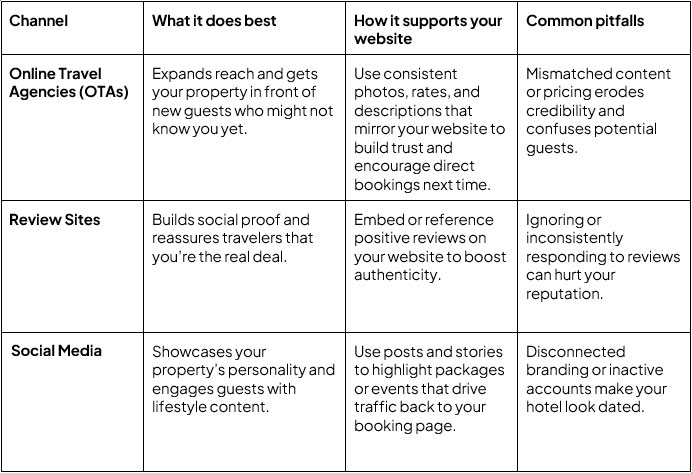
Here’s the point: all these channels orbit your website. Without a strong center, the orbit gets messy. As a hotel, it’s important to keep all these moving pieces in mind and aligned to ensure your online identity is cohesive, consistent, and credible.
Digital Identity Thrives on Consistency
Consistency builds trust. Disjointed branding, on the other hand, builds confusion. Let’s illustrate. Imagine an Instagram ad of a glimmering pool with cocktails at sunset. Next, an OTA listing shows clean, modern rooms. So far, so good. Then you visit the hotel website, and it features carpet that was replaced five years ago. To a guest, this inconsistency isn’t just confusing—it’s unsettling. They start to wonder: Which version is real?
Guests expect coherence:
- Photography should feel like it’s from the same campaign.
- Messaging: if you call your property “boutique and cozy” in one place, don’t switch to “modern and minimal” elsewhere—unless you actually rebranded.
- Rates, amenities, cancellation policies—these should match across channels; nothing erodes trust faster than surprise fees or contradictions.
Digital identity thrives on consistency. From photos to messaging, the story should be the same everywhere. This doesn’t mean copy-pasting your OTA profile onto your website, but it does mean ensuring the core elements—your brand promise, your design aesthetic, your tone of voice—are aligned.
WWT designs hotel websites that complement and elevate the broader digital presence. And with WebRezPro, our property management system and online booking engine, you can integrate availability and rates seamlessly across platforms, ensuring the story is not only consistent, but accurate.
The Importance of Accessibility, Security, and Trust
Here’s a less glamorous truth: your website’s digital identity also depends on things your guests may never see—like accessibility compliance and data security.
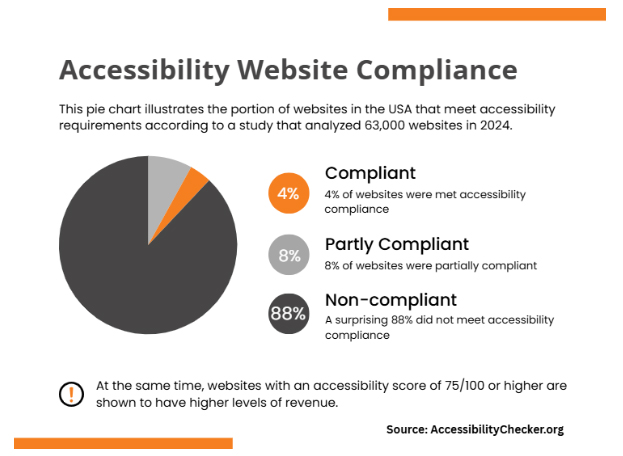
- Accessibility: Hospitality is about welcoming everyone. That includes online visitors with visual, auditory, or cognitive differences. Beyond the moral imperative, accessibility is increasingly a legal requirement. WWT provides automated, AI-powered accessibility solutions that help hotels meet WCAG 2.1 guidelines, ensuring inclusivity and compliance.
- Security: Guests trust you with personal and financial information online long before they hand over their room key. Secure hosting, up-to-date plug-ins, and proactive monitoring aren’t optional—they’re table stakes.
Think of accessibility and security as the polished brass and sturdy locks of your digital hotel. They may not be the first things a guest notices, but they set the tone of trust.
Why Hotels Can’t Afford a ‘Set It and Forget It’ Digital Strategy
A hotel lobby gets cleaned daily. The flowers in the vases get refreshed weekly. Décor evolves with the seasons. Why should your website be any different?
In hospitality, things change:
- Google’s rules adjust. What ranked well last year may underperform this year.
- Guests’ expectations shift: faster load times, better mobile experiences, more transparency.
- Laws change: accessibility standards, privacy laws.
- New technologies: AI is changing how guests plan their trips.
Because of this, websites are living systems, not static brochures. If you let your site sit untouched for years, it starts to show its age. Signing up for a maintenance plan—updates, security patches, design refinements—can help your digital identity grow with your business, not fall behind. Think of it as daily housekeeping for your digital presence. Outdated plug-ins are like squeaky elevator doors—guests might forgive them once, but they’ll definitely mention them in reviews.
Your Digital Identity is Bigger Than a Website—But It Starts There
Your hotel’s digital identity isn’t just a set of disconnected channels. It’s an interconnected ecosystem:
- OTAs drive awareness;
- Social media adds personality;
- Review sites build trust;
- Your website seals the deal.
WWT doesn’t just design websites. We build systems that let WebRezPro, your hosting, your design, your SEO, and your review management tool all work together. When one piece changes, the rest adapt without breaking.
WWT has spent nearly 30 years helping independent hotels craft and sustain that hub. We’ve seen the industry evolve from clunky, server-based reservation systems to cloud-based property management software. We’ve guided clients through the rise of OTAs, the explosion of social media, and the new frontiers of accessibility and compliance. And through it all, one principle has remained steady: your website is the core of your digital identity.
So, the next time you walk through your hotel lobby, take a moment to imagine your digital one. Does it sparkle with the same welcome? If not, maybe it’s time to give your guests the kind of first impression they deserve.